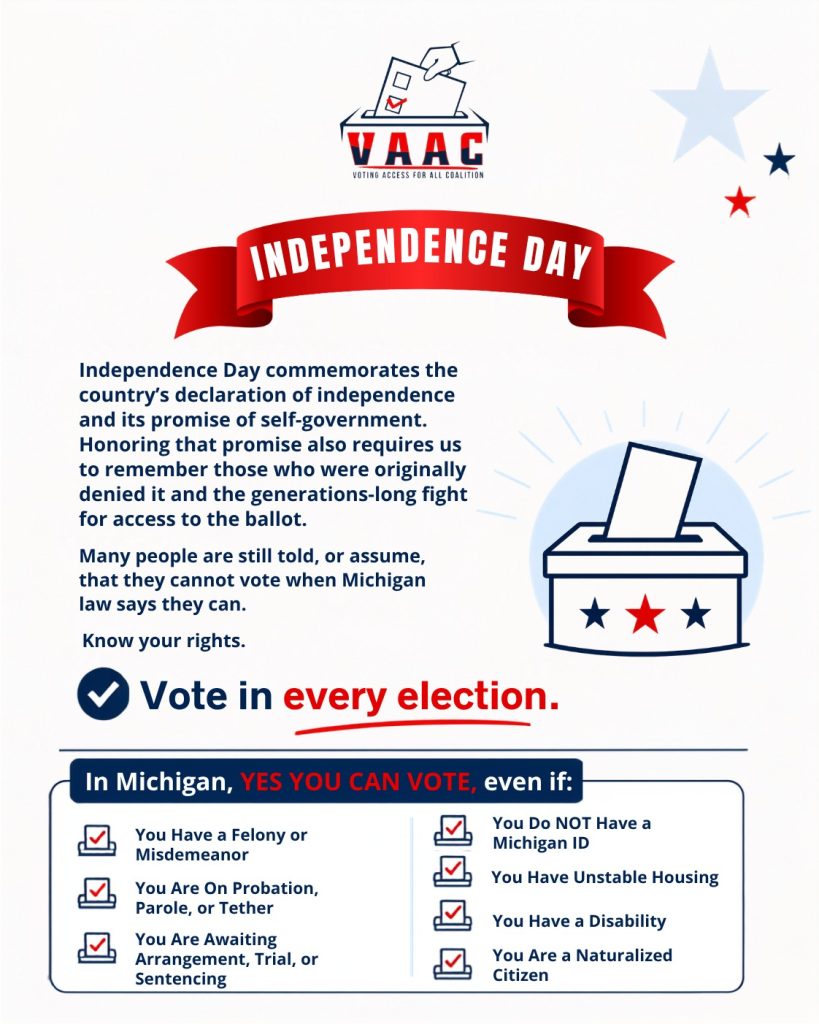
El Día de la Independencia conmemora la Declaración de Independencia del país y su promesa de autogobierno. Para honrar esa promesa, también debemos recordar a quienes se les negó originalmente y la lucha de generaciones por el acceso al voto.
En 1852, Frederick Douglass pronunció su famoso discurso: "¿Qué significa el 4 de julio para el esclavo?".“ pidiendo al país que afronte la brecha entre sus ideales declarados y la realidad de la esclavitud.
Esta semana también se conmemora el aniversario de la Ley de Derechos Civiles de 1964, promulgada el 2 de julio. Su aprobación fue el resultado de años de organización y presión pública, y amplió las protecciones federales contra la discriminación.
Más de 170 años después, el derecho al voto sigue siendo objeto de controversia, debate, defensa y restricción de diversas maneras en todo el país.
Louisiana contra Callais y la Sección 2 de la Ley de Derechos Electorales
Este año, el La Corte Suprema de los Estados Unidos emitió su decisión en Louisiana contra Callais, un caso de redistribución de distritos que debilitó la forma en que la Sección 2 de la Ley de Derechos Electorales Puede utilizarse en impugnaciones relacionadas con mapas electorales discriminatorios por motivos raciales.
Esto no cambia quién puede votar en Michigan en este momento. Los votantes de Michigan deben seguir cumpliendo con las leyes y los procedimientos electorales vigentes en Michigan.
Esta decisión demuestra por qué la representación justa, la participación electoral equitativa y la información clara para los votantes requieren una atención constante.
Conozca sus derechos en Michigan.
A muchas personas se les dice, o dan por sentado, que no pueden votar, cuando la ley de Michigan dice que sí pueden.
🇺🇸 En Michigan, SÍ, PUEDES VOTAR, incluso si: 🇺🇸
🇺🇸 Tienes antecedentes penales por delito grave o leve.
🇺🇸 Estás en libertad condicional, bajo supervisión judicial o con control electrónico.
🇺🇸 Usted está a la espera de comparecencia ante el juez, juicio o sentencia.
🇺🇸 No tienes una identificación de Michigan
🇺🇸 Tienes una vivienda inestable.
🇺🇸 Usted es un ciudadano naturalizado
Vota en todas las elecciones
La libertad siempre ha exigido más que palabras. Proteger los derechos civiles y el derecho al voto requiere más que conciencia individual. Requiere comunidades organizadas, una defensa constante, sólidas garantías legales y personas dispuestas a resistir los intentos de crear obstáculos al voto o socavar la representación justa.
Conoce tus derechos. Ayuda a otros a comprender los suyos. Vota en todas las elecciones en las que tengas derecho a votar.
Visitar michigan.gov/vaac a registrarse para votar o mi.gov/voto a Verifique su registro, encuentre a su secretario electoral, infórmese sobre las opciones de votación y obtenga información sobre las elecciones en Michigan.
 ES
ES  EN
EN